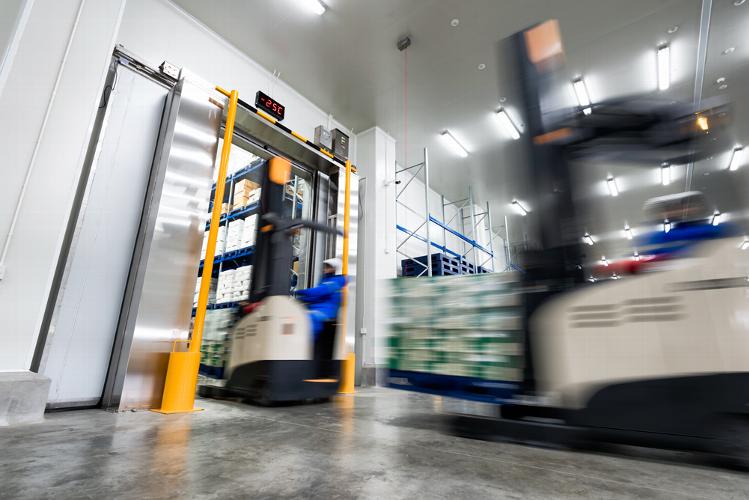
Commercial Cold Rooms Explained
Commercial cold rooms are an essential part of many UK businesses, providing reliable temperature-controlled storage for large volumes of perishable goods. Whether you operate in food production, catering, pharmaceuticals, or warehousing, understanding the different types, uses and costs of commercial cold rooms can help you make informed decisions. In this guide, we cover how cold rooms work, who needs them, installation factors, and cost considerations to help you choose the best solution for your commercial needs.
What Is a Commercial Cold Room and How Does It Work?
A commercial cold room is a specially designed walk-in space where temperature is closely regulated to preserve goods safely. Using advanced refrigeration systems, these rooms maintain consistent temperatures ranging from chilled (2°C to 8°C) to frozen storage conditions (down to -25°C). Built with insulated panels to prevent heat gain and loss, cold rooms are vital for businesses handling high stock volumes that require frequent access and strict hygiene standards.
What Is the Difference Between a Cold Room and a Walk-In Fridge?
Understanding the distinction between commercial cold rooms and walk-in fridges is key when planning temperature-controlled storage for your business.
Cold Room
A cold room is a larger, often bespoke installation tailored to fit within your premises, offering high-capacity storage and customisable temperature zones suitable for industrial-scale operations.
Walk-In Fridge
A walk-in fridge generally refers to smaller, standard-size modular units with limited storage and single-temperature capabilities. Walk-in fridges are best for businesses with simpler, low-volume needs, whereas cold rooms suit more complex or high-demand environments. Cold rooms typically feature stronger refrigeration systems, are often integrated into production spaces, and can be expanded or upgraded as your needs grow.
Read our full comparison on walk-in fridges vs walk-in freezers here
What Types of Commercial Cold Rooms Are Available?
Commercial cold rooms are designed to maintain precise temperature conditions for different industries, products, and regulatory requirements. The correct type depends on what you are storing, the required temperature range, volume capacity, and operational demands.
Chiller Cold Rooms (+2°C to +5°C)
Chiller cold rooms are designed to maintain temperatures just above freezing, typically between +2°C and +5°C. They are commonly used for storing fresh produce, dairy products, meat, beverages, and prepared foods. These units are essential in food service environments, commercial kitchens, hospitality venues, supermarkets, and pharmaceutical settings where consistent chilled storage is critical to product safety and shelf life.
Freezer Cold Rooms (-18°C to -25°C)
Freezer cold rooms operate at sub-zero temperatures, usually between -18°C and -25°C, to preserve frozen goods safely. They require thicker insulation panels, specialist door seals, anti-slip flooring options, and more powerful refrigeration systems to maintain stable temperatures. These rooms are widely used by food manufacturers, cold storage warehouses, catering suppliers, and distribution centres storing frozen meat, seafood, ready meals, and ice cream. Proper design is critical to prevent ice build-up, reduce energy loss, and ensure long-term reliability.
Multi-Temperature Cold Rooms
Multi-temperature cold rooms incorporate separate zones within a single structure, allowing businesses to store chilled and frozen products in one integrated system. Each section operates independently with its own temperature controls and evaporators. This solution is ideal for businesses with mixed storage needs, such as catering companies, food wholesalers, and pharmaceutical suppliers.
Industrial High-Capacity Cold Storage
Industrial cold rooms are designed for large-scale storage in manufacturing plants, distribution hubs, and warehouse facilities. These systems often include heavy-duty refrigeration plant equipment, reinforced flooring, high-density racking, and pallet-access configurations. They are engineered to manage significant stock volumes while maintaining consistent temperatures under heavy operational demand.
At Engetech Ltd, we offer cold room supply and installation for all these types, including energy-efficient upgrades and full compliance with UK standards.
Modular vs Bespoke Commercial Cold Rooms, Which Is Better?
Choosing between a modular and bespoke commercial cold room depends on your operational requirements, available space, budget, regulatory obligations, and long-term growth plans. Both options are designed to maintain controlled temperature environments, but they differ significantly in design flexibility, installation process, scalability, and overall performance.
Modular Cold Rooms
Modular cold rooms are pre-engineered systems manufactured in standard panel sizes and assembled onsite. They are designed for straightforward installation and are typically available in a range of set dimensions and configurations.
Key Characteristics:
- Prefabricated insulated panels manufactured offsite
- Quick assembly and reduced installation time
- Lower initial capital investment
- Standardised layouts and door configurations
- Suitable for indoor or sheltered environments
Best Suited For:
- Restaurants, pubs, and cafés
- Small to medium-sized catering businesses
- Retail units and convenience stores
- Businesses requiring rapid deployment
Because modular systems are produced in standard formats, they offer cost efficiency and faster lead times. They are ideal where space is predictable and operational requirements are relatively straightforward. However, they may have limitations if your premises has irregular dimensions, structural constraints, or complex compliance requirements.
Bespoke Cold Rooms
Bespoke cold rooms are fully customised systems designed around your building layout, operational workflow, and regulatory requirements. Every element - from panel sizing and refrigeration plant to door access, zoning, and flooring - is specified to meet your exact needs.
Key Characteristics
- Custom-built to fit precise spatial dimensions
- Designed around workflow and stock movement
- Can incorporate multiple temperature zones
- Engineered for specific industry regulations
- Greater flexibility for future expansion
Best Suited For
- Food manufacturing facilities
- Pharmaceutical storage
- Distribution warehouses
- High-volume production environments
- Regulated industries requiring compliance documentation
Bespoke solutions are particularly valuable when operational efficiency and long-term scalability are priorities. They allow integration of heavy-duty refrigeration systems, reinforced flooring, pallet access, racking layouts, and advanced monitoring systems. Although the initial investment may be higher, bespoke cold rooms are often more energy efficient and operationally optimised over time.
When to Choose Modular vs Bespoke Cold Rooms
Choose a Modular Cold Room if:
- You need a fast installation
- Budget is a primary concern
- Your space accommodates standard dimensions
- Storage requirements are relatively simple
Choose a Bespoke Cold Room if:
- Your facility has unique spatial constraints
- You operate in a regulated sector
- You require multiple temperature zones
- You anticipate business growth
- Operational efficiency and long-term cost savings are priorities
Why Do Businesses Choose Cold Rooms Over Refrigeration Units?
Cold rooms provide much larger storage volumes, organised racking, and better stock rotation, improving workflow and reducing clutter compared to multiple upright fridges.
The quality of installation also determines long-term value - find out why cutting costs at this stage can be an expensive mistake.
Why cutting costs with cold room installation at this stage can be an expensive mistake
Cold rooms are more energy efficient when operating at scale, maintain consistent temperatures, and typically lower long-term costs, making them an essential investment for many UK businesses.
How Cold Rooms Improve Production Efficiency
Is a Cold Room Worth It for a Small Business?
For small but growing hospitality, retail, or catering businesses, installing a commercial cold room or chiller room can consolidate storage, boost operational efficiency, and handle higher turnover. While the upfront investment surpasses that of standard fridges, long-term cost savings, improved reliability, and easier compliance make cold rooms a worthwhile addition, especially as your business expands and demands increase.
If you're still weighing up which type of cold storage is right for your business, our guide to the difference between walk-in fridges and walk-in freezers can help.
What Is the Difference Between a Walk-In Fridge and a Walk-In Freezer?
Or, Talk to Engetech LTD For Advice
How Much Does a Commercial Cold Room Cost in the UK?
Prices can vary significantly depending on the size, type, complexity, and additional features required. Below, we outline the main elements that impact the cost of purchasing and installing a commercial cold room, so you can make informed decisions and plan your investment effectively.
By Size
Small modular chiller rooms (approx. 6–8 cubic metres) usually start from around £4,000 - £6,000 installed. Larger facilities (over 20 cubic metres) can see prices rise to £12,000 - £20,000, with industrial-scale or bespoke installations regularly exceeding £25,000.
Chiller vs Freezer
Chiller rooms generally cost less, with basic small systems starting at £4,000 - £5,500. Freezer rooms require thicker insulation and more powerful refrigeration, so average costs are £6,000 - £25,000, depending on size and complexity.
Modular vs Bespoke
Modular cold rooms, which use standard panels and layouts, are typically faster and more affordable, ideal for straightforward requirements and budgets of £4,000 upwards. Bespoke cold rooms are tailored to your site, often starting at £12,000 - £25,000 or more, reflecting the design, engineering, and compliance work.
Additional Features
Upgrades like specialist racking (£500 - £2,500), remote monitoring (£350 - £1,000), slip-resistant flooring (£500–£2,000), and energy-efficient systems (£500 - £1,500) affect the overall spend.
Installation
Complex or external installations, difficult site access, or substantial electrical works can add £1,000 - £5,000 to the base price.
What Affects the Cost of a Commercial Cold Room?
Every installation is unique, with costs shaped by technical specifications, operational requirements, and site conditions. Below, we outline the main factors that can affect your cold room investment, giving you a clearer picture of what to expect and which decisions will have the biggest impact on your budget.
Room Size and Internal Height
The physical dimensions of the cold room are one of the most significant cost drivers.
- Floor area determines the amount of insulated panel material required.
- Internal height affects total storage volume and cooling load.
- Larger rooms require more powerful refrigeration systems to maintain consistent temperatures.
- Increased size may require reinforced flooring or structural supports for racking systems.
A small hospitality cold room will naturally cost less than a high-capacity warehouse installation due to materials, plant size, and installation time.
Specification (Chiller or Freezer)
The required operating temperature has a major impact on system design and cost.
- Chiller rooms (+2°C to +5°C) require standard refrigeration plant and moderate insulation thickness.
- Freezer rooms (-18°C to -25°C) require more powerful compressors, thicker insulation panels, heated door frames, and additional vapour barriers to prevent ice build-up.
Freezer installations are typically more expensive due to higher energy demand and specialist components designed for sub-zero performance.
Insulation Thickness
Insulated panels form the thermal envelope of the cold room.
- Thicker insulation improves thermal retention and reduces energy consumption.
- Freezer rooms require greater panel thickness than chillers.
- Higher-spec panels with improved fire ratings or hygiene finishes increase upfront cost.
While thicker insulation increases the initial investment, it can significantly reduce long-term running costs by lowering energy usage.
Refrigeration System Power
The refrigeration system is the core mechanical component of a cold room.
- Larger spaces require higher-capacity compressors and evaporators.
- High-traffic environments may need more robust cooling systems to recover temperature quickly after door openings.
- External condenser positioning, pipe runs, and electrical supply upgrades can increase installation complexity.
The size, efficiency rating, and brand of refrigeration equipment will directly influence both upfront cost and operational expenditure.
Location of Installation
Where and how the cold room is installed affects labour, materials, and preparation work.
- Internal installations are typically more straightforward.
- External installations require weatherproof roofing, cladding, drainage considerations, and reinforced structures.
- Limited site access may increase installation time and labour costs.
- Floor levelling or structural modifications may be required before installation.
Site surveys are critical to identify any preparatory works that could impact budget.
Energy Efficiency Upgrades
Energy performance is increasingly important for cost control and environmental compliance.
- High-efficiency compressors reduce long-term electricity use.
- LED lighting with motion sensors lowers energy consumption.
- Rapid-action or insulated doors minimise temperature loss.
- Variable speed drives improve system efficiency.
Although these upgrades increase the initial capital cost, they can deliver substantial savings over the lifespan of the cold room.
Maintenance Plans
Cold rooms are long-term assets that require routine servicing to maintain performance.
- Planned preventative maintenance reduces breakdown risk.
- Regular inspections help identify wear before it becomes costly.
- Refrigeration servicing ensures energy efficiency is maintained.
Factoring in maintenance from the outset protects your investment and extends the lifespan of the installation.
What Are the Running Costs of a Commercial Cold Room?
Running costs depend on room size, target temperature, insulation quality, and efficiency of the refrigeration unit. Frequent door opening or poor insulation increases energy use, while energy-efficient upgrades help reduce bills. Scheduled cold room maintenance along with quality parts helps avoid breakdowns and keeps running costs predictable.
If your running costs are creeping up, it may be a sign your cold room needs attention - read our guide to the warning signs your cold room needs repair or replacement.
Warning signs your cold room needs repair or replacement
or, Contact us for cold room advice!
How Energy Efficient Are Commercial Cold Rooms?
Energy efficiency is a critical consideration in modern commercial cold room design, as refrigeration systems typically operate continuously and can represent a significant proportion of a facility's electricity consumption. The overall efficiency of a cold room depends on its thermal performance, refrigeration technology, installation quality, and day-to-day operational management.
High-Performance Insulated Panels
Cold rooms are constructed using insulated sandwich panels that create a sealed thermal envelope. High-density insulation cores reduce heat transfer from the surrounding environment, minimising the workload on the refrigeration system. Correct panel thickness, properly sealed joints, and vapour barriers are essential to prevent thermal bridging and condensation. Improved insulation directly lowers energy demand by maintaining stable internal temperatures with less compressor cycling.
Advanced Refrigeration Technology
Modern refrigeration systems use energy-efficient compressors, often with variable speed drives (VSDs). Variable speed compressors adjust output based on cooling demand rather than running at full capacity continuously. This reduces electricity usage, lowers wear on components, and improves temperature stability. Efficient evaporators, optimised airflow design, and correctly sized condensers also contribute to reduced operational costs.
Intelligent Controls and Monitoring
Digital control panels and temperature monitoring systems help maintain precise temperature ranges while preventing unnecessary energy use. Smart controllers can adjust defrost cycles, monitor performance trends, and alert operators to inefficiencies. Remote monitoring further supports preventative maintenance and minimises energy waste caused by undetected faults.
Door Management and Internal Features
Frequent door openings are a major source of temperature loss. Energy-efficient cold rooms incorporate:
- Rapid-close or automatic doors
- High-quality insulated door seals
- Strip curtains or air curtains where appropriate
Correct System Sizing
Oversized or undersized refrigeration systems can both lead to inefficiency. Accurate heat load calculations during the design stage ensure the system is appropriately specified for room size, product type, ambient conditions, and usage patterns. A correctly sized system operates more efficiently and experiences fewer breakdowns.
Long-Term Cost and Environmental Impact
Energy-efficient design may increase initial installation costs, but it significantly reduces lifetime operating expenses. Lower electricity consumption decreases carbon emissions and helps businesses meet sustainability targets. Over the lifespan of a cold room, improvements in insulation, plant efficiency, and control systems can deliver substantial financial savings.
Modern commercial cold rooms, when properly designed and installed, are highly energy efficient. The key lies in combining quality materials, advanced refrigeration technology, intelligent controls, and professional installation to ensure optimal long-term performance.
Be aware that budget installations often compromise on insulation and refrigeration specification - factors that quietly inflate energy bills over time.
Why Cheap Cold Room Installations Cost More Long-Term
What Are the Food Safety Requirements for Commercial Cold Rooms?
Food businesses using cold rooms in the UK must adhere to HACCP guidelines, maintain accurate temperature logs, and ensure regular maintenance. Rooms should have cleanable, hygienic surfaces and feature clear separation of raw and cooked foods if necessary. All sensors and controls must be calibrated and compliant with food safety standards. At Engetech Ltd, we ensure your cold room installation and maintenance meet all UK compliance requirements.
For a complete breakdown of the legislation your business must comply with, what inspectors assess, and the records you need to keep, read our full guide: Cold Room Regulations in the UK: What Businesses Must Comply With.
Read our full guide on professional cold storage for food safety here
How Long Does It Take to Install a Commercial Cold Room?
The installation timeline for a commercial cold room depends on a variety of factors, from the size and complexity of the system to the nature of your site and chosen features. Whether you opt for a modular or bespoke design, understanding what influences the duration of installation can help you plan ahead and minimise disruption to your business.
Modular Systems
Can typically be installed within a few days to two weeks, depending on on-site conditions.
Bespoke Systems
Designing and building to your specification may take several weeks, especially for large or specialised cold rooms.
Site Preparation
Time required for preparing the area, installing electrical infrastructure, and ensuring structural suitability.
Commissioning and Testing
All installations include a thorough testing phase to ensure performance and compliance.
Final Handover
Handover after passing all checks and regulations so you can begin using your cold room safely.
Engetech Ltd offers clear timelines and project management for every cold room or freezer room installation, including regular updates throughout the process.
Do You Need Planning Permission for a Commercial Cold Room in the UK?
Most internal cold room installations within existing premises do not require planning permission. However, cold rooms sited externally or requiring significant building changes may need local authority approval. Factors such as external appearance, noise levels from refrigeration units, and location on the property can all affect permission. It's always recommended to check with local planning authorities early in your project and work with a specialist like Engetech Ltd to ensure full compliance.
Commercial Cold Rooms by Industry, Who Uses Them?
Commercial cold rooms play a crucial role across a wide range of industries, each with its own specific storage needs and regulatory demands. From large-scale food production to the pharmaceutical sector, businesses rely on cold rooms to maintain product safety, quality, and compliance.
Food Manufacturing
Ensures ingredients and finished foods are stored at precise temperatures for safety and quality. See how the right cold storage setup directly improves food manufacturing output.
How Cold Storage Improves Production Efficiency
Catering & Hospitality
Restaurants, hotels, and cafes rely on cold rooms and freezer rooms for efficient ingredient and meal storage.
Understanding your legal cold storage obligations is essential for any food business - read our guide to professional cold storage for food safety.
Why Professional Cold Storage Is Essential for Safe Food Handling
Retail & Supermarkets
Chilled and frozen products are preserved through the supply chain.
Pharmaceutical & Healthcare
Cold and freezer rooms safeguard medicines, vaccines, and sensitive supplies within regulated ranges.
Warehousing & Distribution
High-volume cold storage for logistics and stock management.
Pet Food Suppliers
Keeps raw and finished pet food fresh and safe until distribution.
With over 20 years of experience, Engetech Ltd supports all these sectors with bespoke cold room installation and ongoing chiller room and freezer room maintenance across the UK.
Speak to a Commercial Cold Room Specialist
Ready to enhance your storage? Our Engetech Ltd team is here to help you design, install, upgrade, or maintain your commercial cold room.
Book a site survey, request a personalised quote, or get compliance advice for your chiller or freezer room in the UK.