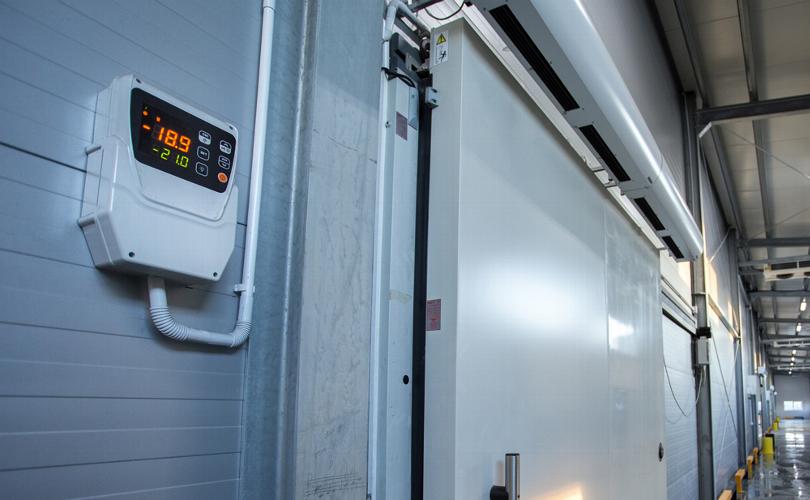
What Temperature Should a Cold Room Be Set To?
A cold room should generally be set between 0°C and +5°C for chilled storage, or -18°C or below for frozen storage, with the exact target depending on what you store and the regulations for your sector.
Setting your cold room to the correct temperature is one of the most important factors in protecting stock, meeting food safety and pharmaceutical standards, and keeping running costs under control. Set it too high and you risk spoilage and compliance failures; set it too low and you waste energy. So, what temperature should a cold room be set to? The right answer depends on your products, your sector, and the regulations you must meet.
This guide explains the correct temperature ranges for chilled and frozen storage, the settings recommended for different sectors, the UK regulations that apply, and how to monitor and maintain accurate temperatures.
What Is the Correct Temperature for a Cold Room?
The correct temperature for a cold room is 0°C to +5°C for chilled products and -18°C or below for frozen products, with high-risk fresh foods best kept toward the lower end of the chilled range. The right setting depends on what you store, your sector, and the regulations you must meet.
Chiller Cold Room Temperature Range
Chiller cold rooms are typically set between 0°C and +5°C. This range keeps fresh produce, dairy, meat, and prepared foods safe while preserving quality and shelf life. Under UK food hygiene law, chilled high-risk foods must generally be kept at 8°C or below, but best practice is to run cooler, at 0°C to +5°C, to build in a safety margin.
Freezer Cold Room Temperature Range
Freezer cold rooms are set at -18°C or below, and often between -18°C and -25°C depending on the product. Frozen foods must be held at -18°C or colder to remain safe and stable, so freezer rooms are built with thicker insulation and more powerful refrigeration to hold these temperatures reliably.
Factors That Determine Your Setting
- Product type: Fresh meat, fish, dairy, and ready-to-eat foods each have ideal ranges within the chilled band.
- Sector regulations: Food, pharmaceutical, and retail businesses each work to different standards.
- Usage patterns: Frequent door openings and high throughput affect how consistently a setting is held.
- Storage duration: Long-term storage often calls for frozen conditions rather than chilled.
Ultimately, what temperature should a cold room be set to comes back to these variables, which is why a specialist assessment of your specific system is always worthwhile.
What Is the Difference Between Chilled and Frozen Cold Room Temperatures?
The difference is that chilled cold rooms hold products above freezing, usually 0°C to +5°C, to slow bacterial growth, while frozen cold rooms operate at -18°C or below to stop most microbial activity and preserve products long-term. The two serve very different purposes.
Chilled Cold Rooms
Chilled cold rooms slow down spoilage and extend the usable life of fresh products by a few days to a couple of weeks. They suit fast-moving stock such as produce, dairy, fresh meat, and prepared meals that will be used relatively quickly.
Frozen Cold Rooms
Frozen cold rooms effectively halt bacterial activity, allowing products to be stored safely for weeks or months. They suit bulk ingredients, frozen meat and seafood, ready meals, and any product that needs long-term preservation without loss of safety or quality.
When Should a Cold Room Be a Freezer?
A cold room should be a freezer when you need to store products long-term, hold bulk stock, or keep goods that are only safe at sub-zero temperatures, such as frozen meat, seafood, and ready meals. If your stock turns over quickly and only needs short-term preservation, a chiller is usually sufficient.
Choose a Freezer When You Need To
- Store products for weeks or months rather than days
- Buy and hold bulk stock to manage cost or supply
- Keep frozen-by-nature products such as ice cream or frozen ready meals
- Maintain a back-up reserve against demand spikes or supply disruption
Multi-Temperature Options
Many businesses need both. A multi-temperature cold room combines chilled and frozen zones in one structure, each with its own controls, allowing you to store chilled and frozen product side by side while keeping them properly separated.
What Temperature Should a Cold Room Be Set To for Different Sectors?
What temperature a cold room should be set to varies by sector, because food, catering, retail, manufacturing, and pharmaceutical businesses each work to different safety standards and product requirements. The ranges below give sector-specific guidance.
Cold Room Temperature for Food Storage
For general food storage, a chilled cold room should be set between 0°C and +5°C, and a freezer at -18°C or below. Keeping high-risk foods toward the lower end of the chilled range provides a safety margin against the 8°C legal maximum for chilled high-risk food.
Cold Room Temperature for Catering
For catering, chilled cold rooms are typically set at 0°C to +5°C and freezers at -18°C or lower to keep ingredients safe across preparation and service. Caterers often benefit from separate zones to keep raw and ready-to-eat foods apart.
Cold Room Temperature for Restaurants
Restaurant cold rooms should hold chilled foods at 0°C to +5°C and frozen foods at -18°C or below. With fast-moving, high-value stock, consistent temperatures and quick recovery after door openings are especially important in a busy kitchen.
Cold Room Temperature for Food Manufacturing
Food manufacturing cold rooms are usually set between 0°C and +5°C for chilled product and -18°C to -25°C for frozen product, often with tighter tolerances and multiple temperature zones. Precise, stable temperatures are critical for both safety and product consistency across a production line.
Cold Room Temperature for Retail Storage
Retail cold room storage should keep chilled products at or below 8°C, ideally 0°C to +5°C, and frozen products at -18°C or below. Reliable back-of-house cold storage protects stock quality throughout the supply chain and supports display refrigeration.
Pharmaceutical Cold Room Temperature Requirements
Pharmaceutical cold rooms are commonly set between +2°C and +8°C for refrigerated medicines and vaccines, with frozen or ultra-low ranges for specific products. These environments demand tight tolerances, temperature mapping, and continuous monitoring to meet MHRA Good Distribution Practice standards.
Need Your Cold Room Set, Calibrated, and Monitored Correctly? Talk To Our Team At Engetech Ltd
What Are the Cold Room Temperature Regulations in the UK?
UK cold room temperature regulations require chilled high-risk foods to be kept at 8°C or below and frozen foods at -18°C or below, with pharmaceutical storage governed separately by Good Distribution Practice. Businesses must also monitor and record temperatures to demonstrate compliance.
Food Safety Regulations
So, what temperature should a cold room be set to under UK food law? Chilled high-risk foods must generally be held at 8°C or below, with best practice at 0°C to +5°C, and frozen foods at -18°C or below. These controls sit within a HACCP food safety management system, which requires documented temperature monitoring.
Pharmaceutical Standards
Pharmaceutical and healthcare storage is governed by MHRA Good Distribution Practice, which typically requires refrigerated medicines to be held between +2°C and +8°C, with temperature mapping and continuous monitoring to prove conditions are maintained.
Refrigerant and F-Gas Compliance
Separately, cold rooms using fluorinated refrigerants fall under the UK F-Gas Regulations, which require regular leak checks and record-keeping. Keeping your system serviced supports both temperature compliance and F-Gas obligations.
What Are the Temperature Logging Requirements for Cold Rooms?
Temperature logging requirements mean businesses must regularly record cold room temperatures and keep those records available for inspection, as part of their food safety or Good Distribution Practice obligations. Accurate logs are often the evidence auditors rely on.
What You Need to Record
- The temperature of each cold room, checked at regular intervals
- The date and time of each reading
- Any corrective action taken if a temperature falls outside the safe range
- Calibration and servicing records for your monitoring equipment
Keeping Records Audit-Ready
Records should be retained for the period set out in your food safety management system and be readily available during inspections. Digital monitoring systems make this far easier by logging temperatures automatically and producing a continuous, tamper-resistant audit trail.
How Often Should Cold Room Temperature Be Checked?
Cold room temperature should be checked at least twice a day for manual monitoring, or continuously where digital monitoring is installed. High-risk and regulated environments benefit most from constant, automated logging.
Manual Checks
Where checks are carried out manually, a common approach is to record temperatures at the start and end of each day, plus after large deliveries or heavy use. This provides a basic record but relies on staff and leaves gaps between readings.
Continuous Digital Monitoring
Continuous monitoring removes those gaps by logging temperatures around the clock and alerting staff the moment a reading drifts out of range. For food manufacturers, pharmaceutical storage, and any high-value operation, this is the most reliable and audit-friendly approach.
How Do You Monitor Cold Room Temperature?
You monitor cold room temperature using calibrated sensors, digital data loggers, and remote monitoring systems that record readings continuously and trigger alarms when temperatures move outside the safe range. This protects stock and provides the records inspectors expect.
Digital Sensors and Data Loggers
Calibrated probes and data loggers measure and record internal temperatures automatically, building the continuous history needed for compliance. Regular calibration is essential, because an inaccurate sensor can mask a genuine problem.
Alarms and Remote Alerts
Alarm systems notify staff immediately if a cold room drifts out of range, and remote alerts can reach managers by app or message even out of hours, allowing corrective action before stock is lost.
Routine Calibration and Servicing
Monitoring is only as good as the equipment behind it. Regular servicing and calibration keep sensors accurate, alarms reliable, and the refrigeration system capable of holding the temperature you have set.
What Happens If a Cold Room Is Too Warm?
If a cold room is too warm, bacteria multiply rapidly, stock spoils, and you risk breaching food safety or pharmaceutical regulations, which can lead to stock loss and failed inspections. Even a small rise in temperature can have serious consequences.
Risks of a Warm Cold Room
- Rapid bacterial growth: Harmful bacteria multiply quickly once temperatures rise into the danger zone.
- Spoiled stock: Perishable and high-value products can be lost in a matter of hours.
- Compliance breaches: Exceeding legal limits risks failed inspections and enforcement action.
- Compromised medicines: In pharmaceutical settings, temperature excursions can render products unusable.
Common Causes of a Warm Cold Room
A cold room that will not hold temperature is usually a sign of a fault, such as worn door seals, low refrigerant, a clogged condenser, or a failing compressor. These issues are exactly what a professional service is designed to catch and correct before stock is put at risk.
Keep Your Cold Room at the Right Temperature with Engetech Ltd
So, what temperature should a cold room be set to? For most businesses, 0°C to +5°C for chilled storage and -18°C or below for frozen storage, adjusted for your sector and the regulations you work to. The key is a system that holds that temperature reliably and proves it consistently.
With over 20 years of experience, Engetech Ltd designs, installs, services, and maintains cold rooms and freezer rooms across the UK. Our servicing and monitoring support keeps your cold room running at the correct temperature, your sensors calibrated, and your records inspection-ready, protecting your stock and your compliance.
Talk to our team today to arrange cold room servicing, calibration, or temperature monitoring for your business.